



OPC Specifications
QuickOPC can be used to create OPC clients that support the most popular OPC specifications, either the modern OPC Unified Architecture (OPC UA), or the OPC "Classic" specifications based on Microsoft COM/DCOM, or Web services (OPC XML-DA). We support following OPC specifications: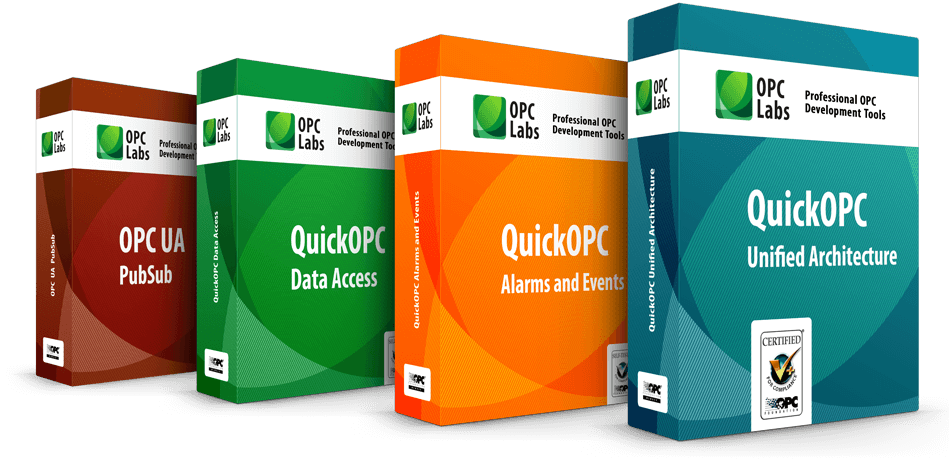
OPC UA is the modern generation of OPC. It brings the preexisting specifications together with a unified data model and uses service-oriented architecture, rather than Microsoft COM, for messaging. The supports Alarms & Conditions, PubSub and many other aspects of the OPC UA specs.
OPC Data Access (OPC-DA) is the original OPC specification. Its common use it to move real-time data from PLCs, DCSs, and other control devices to HMIs and other display clients, but it gained broader usage scope over the time. The current version of the OPC Data Access specification is 3.0. It leverages earlier versions while improving the browsing capabilities.
The OPC XML-DA (Data Access) specification builds on the OPC Data Access specifications to communicate data in XML. It incorporates SOAP and Web services. The current version of the OPC XML-DA specification is 1.01. XML is a technology that is readily available across a wide range of platforms, and the OPC XML-DA is not tied to Microsoft COM/DCOM as the other OPC "Classic" specifications are.
OPC XML Data Access (OPC XML-DA) is the OPC Foundations's adoptions of the XML set of technologies to facilitate the exchange of plant data across the Internet, and upwards into the enterprise domain. Note: For newer installations, OPC Unified Architecture (OPC UA) provides a superset of OPC XML-DA functionality. There is, however, a large installed base of OPC XML-DA servers.
OPC Alarms&Events provides alarm and event notifications on demand (in contrast to the continuous data flow of OPC Data Access). These include process alarms, operator actions, informational messages, and tracking/auditing messages.
Useful links: Documentation / Knowledge Base